
MOST POPULAR REEL OF THE WEEK
Updated every Sunday at 5 p.m. Eastern
Wanda Klaff: When Survivors Stood at the Gallows
A camp guard faced trial and a public execution. Look beyond the photograph to the prisoners she abused, the evidence and the limits of what we know.
Colorized historical photograph, not an original color image. Colorization authorship has not been established. The full story below clarifies the reel’s claims about the truck, location, participants and intent.
Read the full story, evidence and Historacle Lens
Before Wanda Klaff stood beneath a gallows, she had held power over women imprisoned in the Stutthof camp system. The historical account published by Dom Wiedemanna, Pruszcz Gdański’s heritage institution, describes her beating prisoners at the Praust subcamp in 1944, then brutally abusing Jewish women after her transfer to Russoschin, now Rusocin. Those prisoners’ experiences belong at the beginning of this story, before the photograph of her execution. Source: Dom Wiedemanna.
The camp behind the photograph
Stutthof began in September 1939 near what is now Sztutowo, east of Gdańsk. It developed into a concentration camp with an extensive forced-labor network. Its prisoners included non-Jewish Poles and Jews deported from Poland and the Baltic region. The United States Holocaust Memorial Museum documents lethal conditions, epidemics, forced labor, gassings and the killing of sick prisoners by injection. Its account estimates that more than 60,000 people died in the camp. These are facts about the wider system, not a claim that Klaff personally committed every crime described. Source: US Holocaust Memorial Museum.
That distinction matters. A history of mass persecution must explain the institution while remaining precise about each person’s conduct. Klaff’s documented abuse of women in its subcamps gives the execution photograph its essential context.
A trial before the execution
The first Stutthof trial took place before the Special Criminal Court in Gdańsk from 25 April to 31 May 1946. Gedanopedia records fifteen defendants, forty-two people summoned as witnesses, mostly former prisoners, and an inspection of the camp. The proceedings concerned prisoner abuse and responsibility for deaths. Eleven defendants received death sentences: five women, including Klaff, and six men. Two received prison terms and two were acquitted. The verdict was announced on 1 June. Source: Gedanopedia.
The eleven executions followed on 4 July 1946 before tens of thousands of spectators. Although the reel uses the familiar location name Biskupia Górka, Gedanopedia identifies the site more precisely as Stolzenberg, or Wysoka Góra, near Pohulanka in Gdańsk. Source: Gedanopedia.
What the execution account establishes
Historian Marcin Owsiński describes the condemned standing on trucks beneath the gallows. When the vehicles moved away, Klaff’s truck stalled. An attendant beside her pushed her from the platform. The source describes a stalled truck that failed to move, rather than simply saying it would not start. His account specifically names Klaff, so this detail has a stronger basis than an inference from the photograph alone. Source: Owsiński, printed pages 217–218.
Owsiński also records former concentration-camp prisoners taking part in the executions, wearing striped camp clothing. Their identities and individual histories are only partly established. The evidence does not show that the person beside Klaff was someone she had personally abused. Describing the participants as former prisoners is safer than claiming every one was her own victim, or even a Stutthof survivor. Source: Owsiński, printed pages 211–212.
The reel’s claim that the hanging “wasn’t meant to be quick” goes beyond what these sources establish. Gedanopedia describes a short fall and prolonged deaths, but that does not prove an intention to prolong suffering. A photograph cannot settle the organizers’ motives. Source: Gedanopedia.
A note on her age: the commonly reported birth date, 6 March 1922, would make Klaff twenty-four on 4 July 1946. That date is repeated in secondary biographies; a primary birth record was not verified for this article. Secondary biographical reference.
Evidence & sources
The historical account and qualifications above distinguish trial findings, later historical research and interpretation. The reel is preserved as the creator supplied it; the notes clarify the truck, location, participants and claims about intent.
- Local heritage institution
- United States Holocaust Memorial Museum
- City-supported historical encyclopedia
- Marcin Owsiński: Ludowa sprawiedliwość: 4 lipca 1946 roku w Gdańsku
- Secondary biographical corroboration only
Image note: the opening frame uses the colorized photograph supplied in the final reel. The colorization is a later treatment; its authorship has not been established here.
What this reveals about us (Historacle Lens)
Historacle interpretation
An execution photograph can pull our attention toward the condemned person’s final moments and away from the people whose suffering brought her to trial. Youth, a face and a single frozen instant are immediately visible. The prisoners’ daily fear and injuries require us to look beyond the frame.
Taking that wider view leaves room for two serious responsibilities: recognizing the victims and examining how punishment is carried out. Questioning a public execution does not erase the crime. Recognizing the crime does not answer every question about the punishment.
For us, the challenge is also how we share history. Does the image help us understand the lives harmed, the evidence heard and the choices made? Or does the spectacle become the entire story? Keeping uncertainty visible is part of respecting the people whose history we are telling.
Historacle Question
WHAT DOES JUSTICE LOOK LIKE TO YOU AFTER UNIMAGINABLE EVIL??
Explore by topic.
Pick a gallery, then open any story for its reel, full account and evidence.
 World War II15 storiesConflict, persecution, resistance and the long aftermath.
 World War I2 storiesThe trenches, courage and the lives changed by the Great War.
 Vietnam War2 storiesImages, choices and moral courage in a divided war.
 Crime & Mysteries2 storiesHidden lives, unsolved crimes and evidence that leaves questions.
 Survival3 storiesPeople pushed to their physical limits, on land and at sea.
 Power & Society13 storiesAuthority, status, punishment and the pressure to belong.
 Art & Mythology2 storiesThe stories behind art, belief and ancient myths.
Question me.
Disagree with something I share? Look deeper. History needs context, and understanding does not mean excusing.
Look for evidence that supports an account and evidence that challenges it. Bring your own perspective.
Get the next story when it’s ready.
Come for the history. Follow the evidence. Make your own case.
Join free →Join now to lock in free basic membership for life. Any future optional premium content stays separate.
Listen to Historacle.
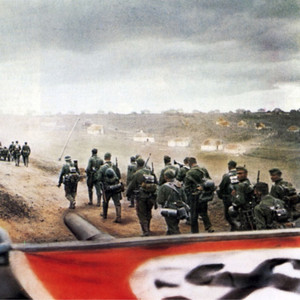
Barbarossa: Ten Days That Turned the War
How Germany’s invasion of the Soviet Union transformed the Eastern Front.
Play the episode on Spotify →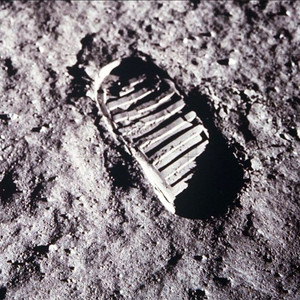
From Beep to Footprint: How Sputnik Ignited the Moon Race
How a signal from space helped ignite the race to the Moon.
Play the episode on Spotify →The events happen once.
The human patterns keep showing up.
Fear. Loyalty. Ambition. The choices people make under pressure. Come for the history, examine the evidence and make your own case.